I Wrote It Down

A generation is being formed by default. I wanted to hand my children something that holds.
A child is never waiting in neutral.
There is no holding pattern, no unformed stretch of years where nothing lands. Long before a young person has language for love or truth or money or God, something is already teaching him what those words mean. Not a lesson. A formation. Teaching hands over information. Formation shapes what a person fears, trusts, excuses, and eventually becomes, and it does its work quietly, before anyone thinks to ask permission.
That is the premise under the book.
If the serious adults in a child's life do not hand down a foundation, the space does not stay empty. It fills. Usually with whatever was loudest that year. The problem was never access. These kids are drowning in answers. Feeds, slogans, and confident adults lining up to tell the next generation what life is for. The problem is foundation.
That is the burden that became the book.
Pillars: How to Build Your Life on Rock is a father's guide to the things that hold. It moves from the self outward, through love and family and work, and it ends in letters from a father to his children. The range is part of the point. I wanted my kids to feel, years from now, that I had been thinking about every room they would walk into.
But I did not want a devotional with softer lighting. I did not want a parenting theory or a pile of rules a young person obeys because an adult said so. I wanted every page to earn its claim before it asked for belief. If a thing is true, it can stand in reality. It shows up in consequences. It holds under pressure.
There is a verse I keep close. It is the one I most want my children to own before the world tests them on it.
Consider it pure joy, my brothers and sisters, whenever you face trials of many kinds, because you know that the testing of your faith produces perseverance. Let perseverance finish its work so that you may be mature and complete, not lacking anything. (James 1:2-4 NIV)
That is not a verse about comfort. It is a verse about being shaped by pressure instead of broken by it. The whole book is built on that turn. Scripture is the authority. But reality belongs to God too.
That mattered from the first page. I did not want to write a book that asked a young reader to shut off his mind in order to keep his faith. I wanted the opposite. I wanted him to see. To ask what a thing costs before he reaches for it. To notice where a phrase cracks. To understand why discipline builds freedom, and why love cannot be possession.
A young person does not need flattery. He needs structure. He needs a way to tell the real thing from the counterfeit before the counterfeit gets expensive.
That is more true now than when I was young.
The world my children are entering is louder, stranger, and less patient than the one I got. Apps will disappear into agents. Work will be pressured. Screens will keep moving closer to the body. Intelligence will be cheap. Advice will be cheap.
Judgment will not be cheap. Wisdom will not be cheap. A governed soul will not be cheap.
So I do not think the next generation mainly needs more access. They will have access, more than they can survive without formation. They need something underneath them that does not move every time the culture changes vocabulary. They need truth strong enough to argue with, not so fragile it has to hide from a hard question.
That is also why the book is openly Christian.
Not decorative Christian. Not branded Christian. Not Christian language sprinkled over ordinary advice to make it sound deeper than it is. Christian because the foundation is Christ, and pretending otherwise would be a lie told to children. If Christ rose from the dead, Christianity is not one option among many arranged on a shelf. If Scripture is true, the question is not whether it fits the mood of the age. The question is whether we will build on what holds.
That does not make the book harsh. It makes it honest.
I wrote it for a strong fourteen-year-old. Bright enough to ask hard questions, young enough that the deepest answers have not hardened yet. Plain enough to be understood. Serious enough not to be outgrown. That is harder than it sounds, because children can smell fake language and teenagers can smell performance. They know when a book is trying too hard to be liked. I wanted none of it. No costume. No youth-group voice. No pretending the world is safer than it is.
The form had to match the burden. One page. One idea. A true thing stated plainly enough to be tested. Something a parent could hand a child, a teacher could assign, a young person could return to later, when the first reading had finally caught up to the season that needed it.
Because that is how wisdom usually works. You do not understand a true thing the first time you hear it. It waits. Then life applies pressure, and the sentence you skimmed years ago suddenly has weight.
A conversation can vanish. A book waits.
That may be the cleanest way to say it. I wanted to write something that could wait. Something a young reader could open when the world gets loud, when a choice gets expensive, when the easy phrase finally stops working.
I wrote it for my children first. That order matters. But the problem is larger than one home. A generation is being formed by default. By screens. By appetite. By confusion dressed as compassion. By a culture that keeps handing young people phrases that sound kind and brave and collapse the second real weight lands on them.
That cannot be answered with nostalgia. It has to be answered with formation. Serious adults handing down what holds, in words clear enough for the young to test and strong enough for them to keep.
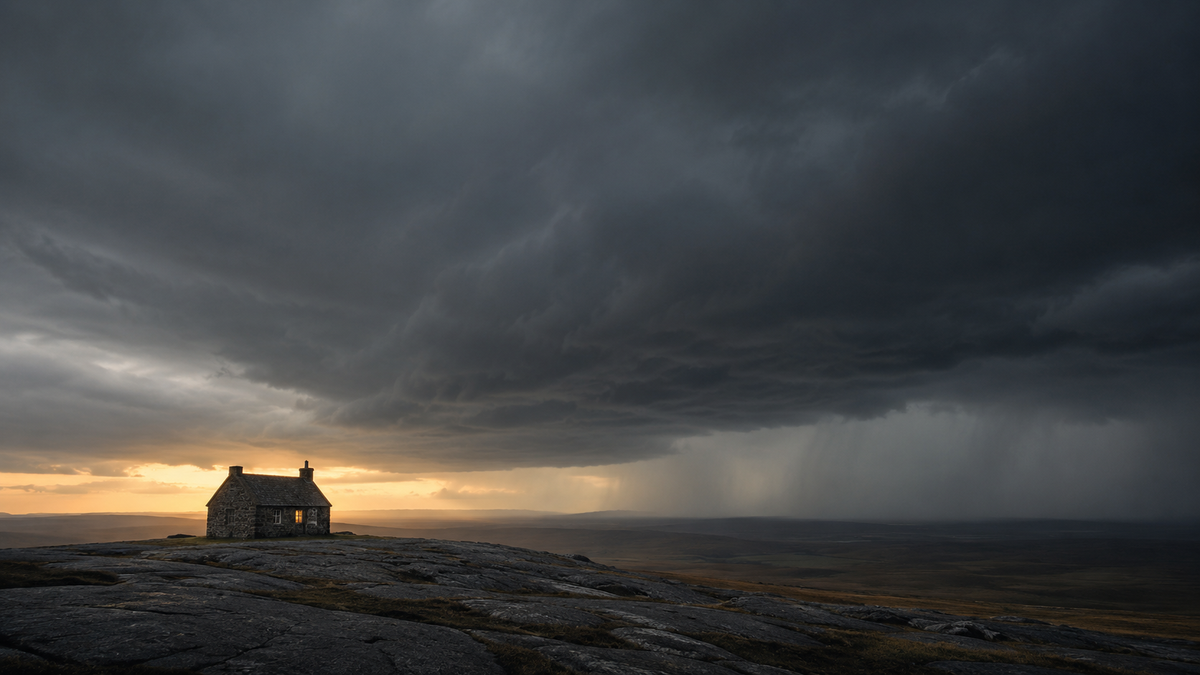
I do not know every room my children will walk into. No parent does. I do not know every lie they will hear or every storm that will come for them. But I know storms come. Jesus said it plainly.
Therefore everyone who hears these words of mine and puts them into practice is like a wise man who built his house on the rock. The rain came down, the streams rose, and the winds blew and beat against that house; yet it did not fall, because it had its foundation on the rock. But everyone who hears these words of mine and does not put them into practice is like a foolish man who built his house on sand. The rain came down, the streams rose, and the winds blew and beat against that house, and it fell with a great crash. (Matthew 7:24-27 NIV)
The storm is not optional. The foundation is.
I know comfort is a terrible god. I know truth is mercy, even when it cuts. I know a life without God at the center eventually bends around something smaller.
So I wrote it down.
Pillars is not here to flatter anyone. It is here to help a young person build a life on rock.