The First Death

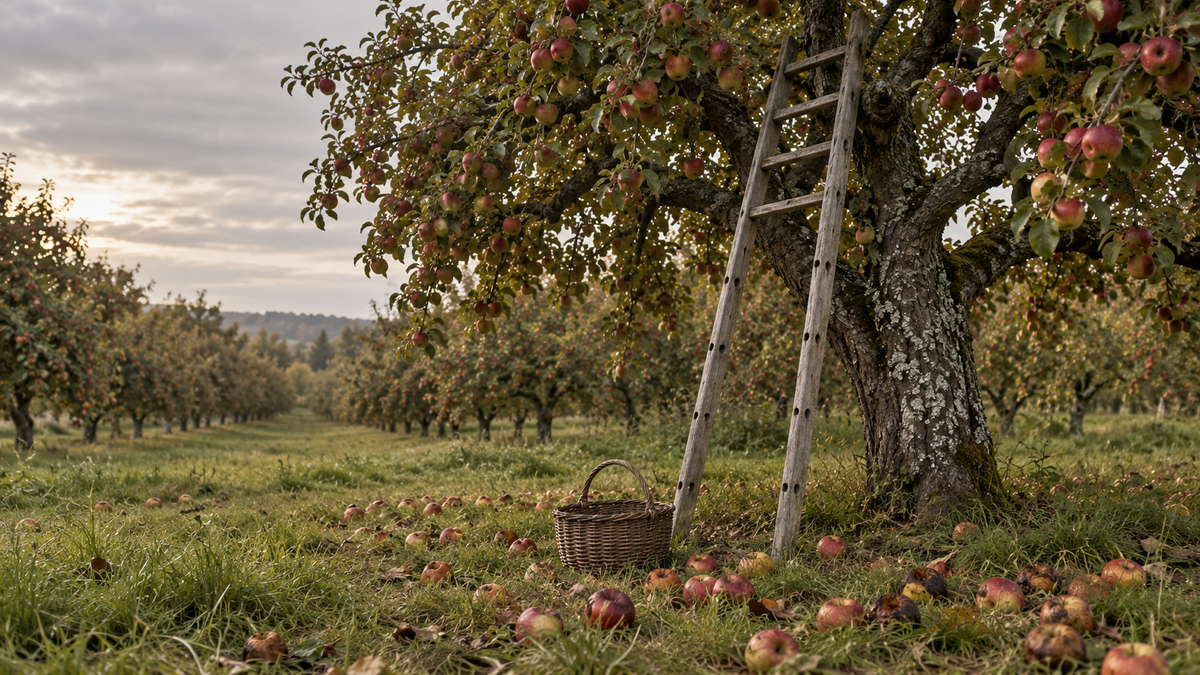
What runs out after abundance isn't food. It's being needed.
Over dinner recently, one of my investors brought up a mouse experiment from 1968. I knew the outline. I had never read the paper. So I went home and read it. It is the most frightening paper I have read this year.
The setup reads like paradise. A scientist named John Calhoun built an enclosure and removed the usual external causes of death. Unlimited food. Clean water. Warm nests. No predators. Disease kept under control. He called it Universe 25, because he had already built twenty-four of them.
Four pairs of mice went in. The population exploded, doubling roughly every two months. The habitat had nest space for about 3,840 animals. Around day 560 the colony peaked at roughly 2,200.
Then it stopped working.
Mothers abandoned their young. Some males turned on each other. Others withdrew completely. They ate, slept, and groomed themselves, hour after hour, day after day. They did not fight. They did not court. He called them the beautiful ones, because they looked perfect. Glossy coats, clean bodies, alert eyes. None of them ever raised a single pup.
The last conception happened around day 920. Reproduction never resumed. The paper projected the colony would die out with the food still there.
The easy lesson is that the mice got too comfortable. That is not what the paper shows.
The serious objection is that this was a crowding study. It was. Calhoun was studying density, and the mice could not leave. There was no frontier, no emigration, no way out of the enclosure. Later researchers emphasized social contact and disrupted behavior over simple population density. Too much contact. Too many rivals. Nowhere to go.
Grant all of it. Then look at what stayed abundant. The food never ran short. The water never ran short. At the peak, roughly a fifth of the nest sites sat empty.
Nest space remained. A place in the social order did not.
Every role in that society was held. Territory was claimed. The positions that made a male a male and a mother a mother were occupied by the animals who got there first. The young grew up with food and water and no way in. Mothers pushed them out early. Competition and constant disruption broke the process by which a young mouse learns to be an adult. They never developed the behaviors adulthood requires, because the path into adult life had broken down.
The paper has a name for what happened. The mice died twice. First the social self died, as the behaviors that made a mouse a mouse quietly dropped away. Then, much later, the body followed.
The first death is the one that matters. You could miss it if you looked only at the body. A beautiful one looked perfectly healthy.
For two centuries the great fear about human numbers ran the other way. Too many mouths, too little bread. That enclosure points at a stranger famine. The bread never runs out. What runs out is a way in for the people eating it.
That is the pitch you hear in every room I sit in. Solve provision and people flourish. Calhoun solved provision.
The mice cannot tell us what will happen to people. They can tell us what to watch for. This is a warning, not a prediction.
Earlier this year I wrote about the crisis after abundance. The argument was that necessity used to organize the person, and when it recedes, a man is left facing himself. This is the other half. Not what happens inside the man when necessity leaves. What happens to a society that can feed people more easily than it can need them.
Purpose is not passion. Passion is something you feel. Purpose runs deeper than usefulness. But one of its plainest expressions is being needed. Carrying a responsibility. Holding a role that requires competence. Knowing that something real goes wrong if you do not show up.
A person can be fed, entertained, informed, and comfortable, and have almost nothing in his life that depends on him.
Picture what that looks like in human form. Not a man in crisis. A man who is fine. He is fed. His rent gets paid, by a job or by someone else. His evenings are full. There is always another video, another game, another feed refreshed. He is informed about everything and responsible for nothing. If he slept until noon tomorrow, nothing would break. If he disappeared for a week, the people around him would notice, but nothing would stop.
He is not starving. He is not suffering in any way he could explain to you. He might tell you he is doing well. From the outside he looks healthy. Groomed. Calm. A beautiful one.
That is the part that should scare us. The first death does not announce itself. Nobody files a report when a man stops being needed. There is no line on any dashboard for it. The economy can grow, the shelves can stay full, the screens can get brighter, and underneath all of it, the social self quietly drops away one person at a time.
We are building machines that make intelligence, production, information, and execution cheap. I want the abundance. I am building toward it. That is exactly why I read this paper the way I did. Every capability we make abundant can also remove a place where a human being used to be required. The first draft someone used to write. The grunt work someone used to learn the trade by doing.
The hardest hit may not be the fifty-year-old who loses a job. He at least became someone first. It may be the twenty-two-year-old who never gets a first one.
The bottom rung has always looked like waste from the top. Somebody doing slowly what an expert could do fast. Somebody making mistakes that cost the company time. Somebody who needs to be checked, corrected, and taught. It is exactly the kind of work that is easiest to hand to a machine, and the business case for doing it is real.
But the bottom rung was never only about output. It is where a person becomes competent. It is where he learns that showing up on time matters because someone is waiting on him. It is where he gets trusted with something small, handles it, and gets trusted with something bigger. It is where a young person finds out he is capable of carrying weight. Nobody learns that from watching. You learn it by being needed before you are good.
Take the rung away and you save a salary and lose a formation.
That is exactly what the young mice lost. Not food. Entry.
So here is the uncomfortable question. What happens when a society can provide for people faster than it can give them anything worth carrying?
We are not mice. That difference is real, and it is the whole hope. Human beings build new roles. Companies, churches, crafts, schools, disciplines, families, forms of service that did not exist a generation ago. Every wave of machines has buried old work. People built new work on top of it.
But the difference is not only that we are clever. Scripture describes a different paradise, and the difference is in the design.
When God put man in the garden, He gave him food, water, beauty, and safety. He also gave him a job. "The LORD God took the man and put him in the Garden of Eden to work it and take care of it" (Genesis 2:15, NIV).
Look where that sits. Before the fall. Before the thorns and the sweat. Work was not the punishment. The toil was. The assignment was the design.
And notice how the assignment arrives. The man does not fight his way into it. He does not wait for someone older to die off and leave a vacancy. It is handed to him by the One who made him. The assignment did not make the man valuable. It gave his value somewhere to go.
The enclosure guaranteed provision and left entry to the struggle. Eden handed the man his work along with his bread. One produced the beautiful ones. The other produced a man who was needed from the second chapter of the Bible.
And when the church describes itself, it describes a body where no part gets to be unnecessary. "The eye cannot say to the hand, 'I don't need you!'" (1 Corinthians 12:21, NIV). That is not a sentiment. It is a structure built to bring people in and require them.
That is why collapse is not inevitable. Neither is escape.
New roles do not appear because we need them. Someone has to build them. And the someone is not an abstraction. It is the father deciding whether his son's chores actually matter or are just busywork. It is the church deciding whether its young people serve or only attend. It is the company deciding whether to keep a junior seat open when the machine could fill it. It is the builder deciding whether what he ships hands people responsibility or just removes it.
There is a simple test for the difference between building a role and building a comfort. A comfort asks nothing of you. A role can be failed. Someone is counting on it. The competence it requires grows the longer you carry it. If nothing depends on you showing up, it is not a role. It is furniture.
Much of what abundance makes easiest to sell is comfort. Roles are harder. They take more trust, more patience, and more tolerance for someone else's mistakes. They are also what keeps the social self alive.
If old roles disappear faster than worthy new ones get built, abundance can leave people materially secure and socially unnecessary.
That is the warning. Not famine. Uselessness.
I have two kids, and this is where it stops being abstract for me. The mice did not fail because they were hungry. They failed because the young never found a way into the life they were born to carry.
So the question for every father, every pastor, and every builder right now is not whether our children will have enough. They probably will. The question is whether anything real will depend on them.
The second death took years. The first one only needed a childhood.
Sources
John B. Calhoun, "Death Squared: The Explosive Growth and Demise of a Mouse Population," Proceedings of the Royal Society of Medicine, 1973
https://journals.sagepub.com/doi/epdf/10.1177/00359157730661P202
"Death Squared," Science History Institute
https://www.sciencehistory.org/stories/disappearing-pod/death-squared/
"Universe 25 Experiment,"
The Scientist https://www.the-scientist.com/universe-25-experiment-69941
Genesis 2:15 (NIV)
https://www.biblegateway.com/passage/?search=Genesis%202%3A15&version=NIV
1 Corinthians 12:21 (NIV)
https://www.biblegateway.com/passage/?search=1%20Corinthians%2012%3A21&version=NIV
The Crisis After Abundance
https://essays.brandoncarneiro.com/the-crisis-after-abundance/