What Did You Create Today?

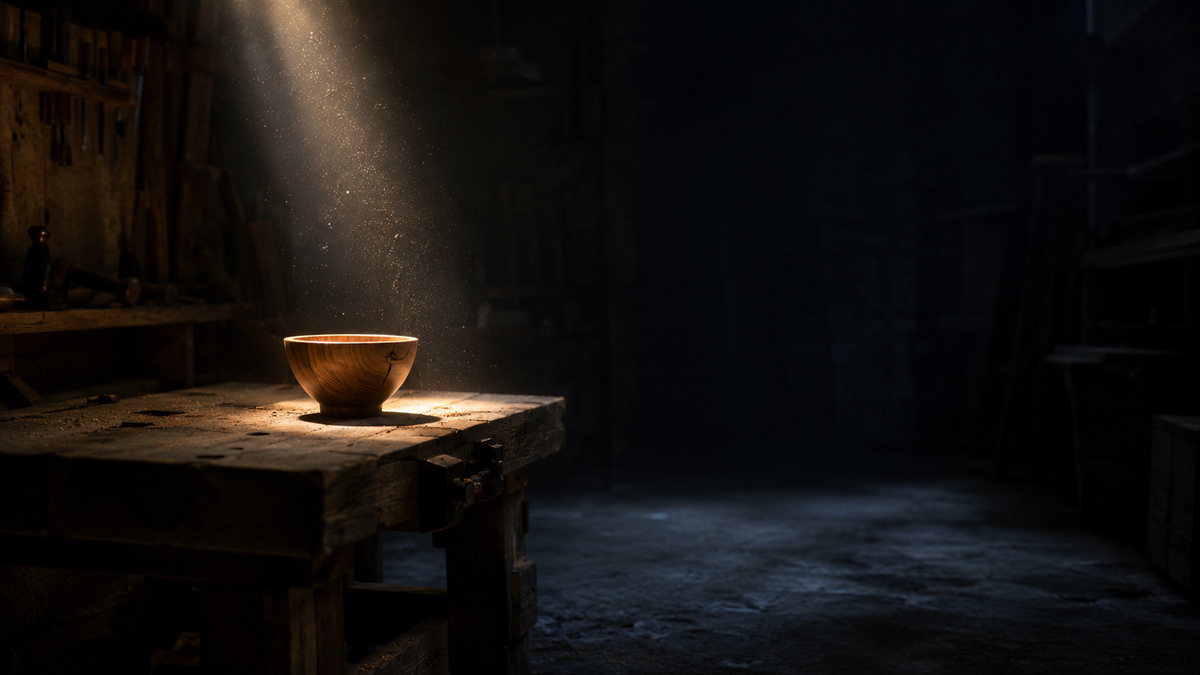
The light is coming for everyone who confused motion with work.
Knowledge used to be scarce. You had to go find it. Sit under someone who had it. Buy the book, take the class, get access to the room. That world is gone. The answer is everywhere now, all the time, sitting behind a glass screen, free.
So the old question stopped being useful.
What did you learn today? It was a good question for a long time. It is the wrong one now. Learning was never the finish line. It is lumber stacked in the yard. Grapes before the wine. Code before the product. Until something is made, learning is only potential.
Creation is the test.
That does not mean everyone needs to start a company or become an artist or some internet version of a creator. That word is already cheapened past recognition. I mean something older. A maker. A person who turns effort into value another human being can actually receive. The plumber is a maker. So is the cook, the nurse, the carpenter, the kid drawing something at the table and giving it away with pride. The category is not status. It is not income. It is not credential. It is contribution.
The maker leaves the world with more than he found.
We are told the deepest divide in society is between the rich and the poor. That story is useful to the people who want power over both. It makes the poor resent the rich. It makes the rich fear the poor. Worker against owner, capital against labor. It keeps everyone watching the wrong line.
That was never the real divide.
The real divide was always makers and takers. A poor maker and a rich maker have more in common with each other than either has with a credentialed taker. The farmer and the engineer both understand constraints. The cook and the carpenter both know what it takes to turn raw material into something a person can use. They may live in different tax brackets. They are standing on the same side of civilization.
The maker class was always bigger than the bracket.
This is not an attack on ordinary work. Ordinary work is honorable when it creates value. The man who clocks in, fixes what is broken, serves the customer, drives the route, feeds his family, and leaves the place better than he found it is a maker without romance around him. He may own no equity. He may never be called brilliant by anyone. He is useful.
The enemy is not ordinary work. The enemy is fake work.
I know the maker's loop because I run it. I built PILLAR first as a software layer for churches. Then I looked hard at the market and saw the ceiling was low and the adoption curve was a wall, slow institutions moving slowly, years of selling before anyone clicked anything. So I killed it. I rebuilt the whole thing around the consumer. That call cost me money already spent and months I do not get back, and it was still the right call, because the data was not there.
That is the loop. You throw it against the wall. You watch what happens. If it sticks, you push. If it does not, and there is no signal telling you it ever will, you kill it and move. The maker lives inside that risk every day. The taker never runs the loop, because the taker never ships anything that can fail.
The taker is something else. He certifies. He mediates. He builds distance between the person creating value and the person receiving it, then calls that distance a profession. He hides inside process and moral language. He speaks for the worker while standing on the worker's back.
You can see him everywhere once you know the shape.
You see him in institutions that make simple things hard. In the dead corridors of public systems where citizens wait in line so someone can type information into a terminal that should have handled it already. In meetings about meetings, reports about reports, approval chains where responsibility goes to die. He does not create value. He creates distance from value, and he has spent a generation calling that distance a career.
That distance is about to collapse.
AI is a light. It falls on the work and shows what was actually there. Which hours were judgment and which were friction wearing a badge. It makes the maker more dangerous. One serious builder will do what used to take a department. One operator with taste and nerve will move faster than a room full of people routing paper through a process.
That is why the taker is in trouble.
Not because software can do everything. It cannot. It does not own the outcome. It does not repair the pipe or sign the note when the cost comes due. But it can vaporize the paperwork fog that protected people who confused motion with work. The fog was the job. The fog is lifting.
AI will not kill work. It will kill pretending.
It is two in the morning and the house is silent and I have been in the chair fourteen hours, eyes burning, and the feature I built that day does not work, and there is no one to tell me whether to keep it or kill it. No committee. No vote. Just me and the screen and the call. I kill it. I own that alone, in my own time and my own money, and I get up the next day and do it again. The taker has spent years building a moat out of process so he never has to sit in that chair. The water is draining out of that moat now.
The old world asked children what they learned.
The new world asks something harder.
What did you create today?
That question is coming for everyone.